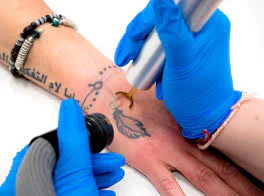
UltraClear is a fibre laser used for resurfacing, and the reason it gets discussed separately from other lasers is the wavelength it uses. At 2910 nanometres it sits at a point where water absorbs light very strongly, and skin is mostly water.
That absorption is the whole story. Energy taken up efficiently at the surface does not travel far beyond it, which changes what the treatment does to the skin underneath and how long the recovery takes.
What does strong absorption actually change?
Two things, both of which follow from the same physics.
The first is precision. Energy absorbed within a very shallow depth removes tissue there rather than spreading into the layers below. The treated depth can be controlled tightly, which is what allows the same device to be set for a light refresh or something considerably more substantial.
The second is heat. Conventional ablative resurfacing transfers a good deal of heat into surrounding tissue, and that thermal spread does two things at once: it contributes to tightening, and it causes most of the downtime and most of the pigmentation risk. Less spread means less of both.
Why it is described as cold ablation
The tissue is removed rather than only heated, which makes it ablative. What distinguishes it is how little thermal energy reaches what remains, which is why the term cold appears alongside a treatment that is emphatically not cold to the touch.
What is it used for?
- Uneven skin tone and superficial pigmentation
- Fine lines and early textural change
- Rough or dull surface texture
- Enlarged-looking pores
- Acne scarring, depending on depth and on the settings used
- General skin quality where nothing specific is wrong
The adjustability is the useful part. Rather than a fixed treatment, it is a device that can be dialled to the depth appropriate for what is being addressed and for how much recovery you can accept.
Light or deeper: the choice you actually make
Because the depth is adjustable, the real decision is not which device but how much treatment.
A light setting is a refresh: minimal downtime, a course of treatments, incremental improvement in tone and texture. It suits people who cannot take time out and are willing to build a result gradually.
A deeper setting does more in one session, with correspondingly more recovery. It suits textural change substantial enough that a light approach would take a long time to shift.
Neither is the correct answer in the abstract. This is the trade every resurfacing treatment asks you to make, and here it is made by adjusting settings rather than by choosing a different machine.
What does a session involve?
Numbing cream first, left to work for around half an hour and longer for deeper settings. The treatment itself typically takes fifteen to thirty minutes for a full face depending on depth.
Most people describe it as hot and prickling rather than sharp, with cool air used throughout. It is generally reported as more comfortable than conventional ablative resurfacing at equivalent depth, which follows from the reduced thermal load.
Recovery
Depth decides this, so anyone quoting a single recovery time for the treatment is describing one setting rather than the treatment.
A light treatment usually means redness for a day or two, a tight dry feeling, and light flaking over the following days. Most people carry on as normal and are back in makeup within a couple of days.
A deeper treatment means more: more pronounced redness, possible swelling for the first day or two, a sandpaper texture and more visible peeling over the following week. Still generally shorter than conventional deep ablative resurfacing, but a week of looking treated rather than an afternoon.
Either way, sun protection matters for weeks rather than days. Freshly resurfaced skin pigments readily.
Who does it suit?
People who want resurfacing but need the recovery to fit their life, and people who would rather build a result across a course than commit to one heavy treatment.
The lower thermal load is also relevant where heat-based resurfacing calls for more caution. That is a clinical judgement made at consultation and confirmed by patch test rather than something to conclude from reading.
When it is not appropriate
Active infection or inflammation in the area, recent sun exposure or a tan, pregnancy, and certain medications all need discussing beforehand. Mention any history of cold sores, since preventative medication is usually given. A patch test is carried out before treatment.
How it compares with the alternatives
CO2 resurfacing transfers more heat, which produces more tightening and more downtime. Where the change needed is substantial, that thermal effect is doing useful work rather than simply causing inconvenience.
LaseMD is non-ablative, heating without removing tissue, with a lighter recovery again and a correspondingly lighter effect.
Morpheus8 is not resurfacing at all. It works beneath the surface with radiofrequency and addresses laxity, which no surface treatment reaches.
These are different jobs rather than better and worse versions of the same one, which is why a clinic with several devices can match the tool to the problem.
How many sessions?
Depends entirely on depth. Lighter treatments are delivered as a course; deeper ones achieve more per session and need fewer. The number is agreed at consultation after your skin has been assessed, not sold as a fixed package beforehand.
Improvement continues developing for weeks afterwards as collagen remodels, so the result at three months differs from the result at three weeks.
Getting assessed
The useful conversation is not about the device but about what is being treated, how deep it sits, and how much recovery you can accommodate. Those three settle it.
Pulse Light Clinic is CQC-registered and doctor-and-nurse-led, and has been treating skin in London since 2001. You can read more about UltraClear and how it is delivered here.
Book a consultation to have your skin assessed and the right depth of treatment agreed.